Compliance
What Exactly Are Safety Glasses? Understanding Z87, ANSI & OSHA Standards
What Are Safety Glasses?
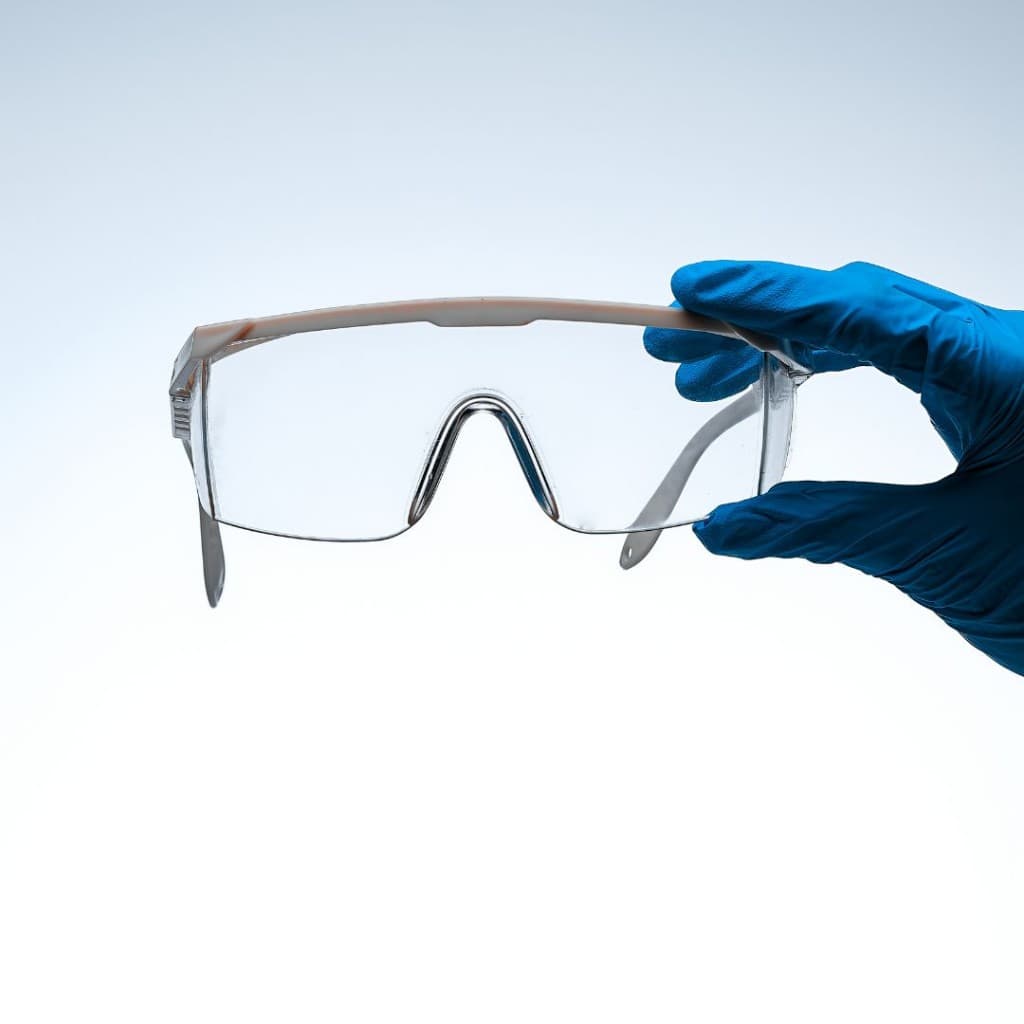
Safety glasses are classified as personal protective equipment (PPE). They are specifically made to help protect against eye injuries in the workplace that could result in temporary or permanent vision loss.
Unlike normal eyewear, safety glasses have been manufactured to comply with what's called an ANSI Z87.1 standard to ensure proper impact resistance and lens durability. That standard is written and published by ANSI and ISEA. OSHA is the agency that requires employers to provide eye protection meeting it, and its rule names the specific editions it accepts (29 CFR 1910.133(b)). Together they establish the minimum performance requirements to ensure that workers receive proper protection in environments that are hazardous to the eye.

They are most commonly manufactured with polycarbonate lenses, a material that is highly impact resistant compared to other lens materials such as glass or plastic.
Before reaching the workplace, certified safety glasses must undergo special ANSI Z87.1 testing. If the glasses pass the evaluation for durability, lens retention, and resistance to common hazards, then they receive the proper Z87 marking. That mark is the manufacturer's statement that the glasses were built and tested to the standard. OSHA doesn't approve or certify eyewear itself, so there's no OSHA stamp to look for; the Z87 mark is what shows the eyewear meets the standard OSHA points to.
What Does Z87 Mean
If you have ever noticed a "Z87" scribed on your pair of safety glasses, that means your glasses meet the ANSI Z87.1 safety standard.
The American National Standards Institute (ANSI) is a private, non-profit organization that oversees the creation of voluntary safety and performance standards in the United States. The Z87.1 standard is a part of the ANSI "Z" series of safety standards and the 87 specifically refers to a section dedicated to Occupational and Educational Personal Eye and Face Protection Devices. The .1 following thereafter is the first standard in that category and gets updated periodically.
For eyewear to carry the Z87 mark it goes into several different kinds of testing:
- Impact resistance: Lenses and frames must withstand specified high-velocity and mass impact tests without breaking.
- Field of coverage: The designs must provide adequate coverage from hazards approaching from different angles.
- Optical quality: The lenses are evaluated to ensure there is no distortion when in use.
- Permanent marking: For the glasses to be fully compliant they must display the Z87 mark on them in a legible way for proper identification.
The presence of the marking confirms that the eyewear meets the OSHA safety requirements. Employers are legally obligated to make sure that their employees who are exposed to potential eye hazards receive and wear proper glasses that carry the Z87 marking.
Why Z87 Matters
ANSI Z87.1 is the U.S. recognized standard that sets the benchmark for occupational eye protection. It standardizes testing and certification criteria so that workers and employers can rely on a consistent measure of safety.
What About Z87+?
In certain cases there is Z87+ eyewear that identifies glasses that have passed a high-velocity and mass impact test beyond the baseline Z87 standard. The higher rating is often required for environments where flying objects, heavy tools, or high-risk machinery operations present a greater hazard.
Industries like construction, oil and gas, and heavy manufacturing tend to require a Z87+ marking.
OSHA's Role in Safety Eyewear
As mentioned, OSHA sets and enforces workplace safety rules in the United States when it comes to eye protection itself. Do make note that they do not manufacture or produce any of the glasses themselves.
What This Means in Practice
When a workplace involves any high risks such as flying debris, dust, chemicals, or radiation, OSHA requires the use of Z87 certified glasses. Employers must then provide the appropriate eyewear and ensure employees have access to it. Workers, in turn, are then responsible for using the eyewear as intended. Companies that fail to comply are subject to citation and penalties.
Why It Matters
While some people may feel they do not need to wear any protective eyewear in the workplace, data shows that workplace eye injuries are one of the most frequent and commonplace accidents to occur. Most workplace eye injuries are preventable through the use of properly rated safety eyewear.
Even in workplaces indoors or small spaces, anything that could produce small fragments of metal, wood, or chemical splashes can result in permanent vision damage or loss. Wearing Z87-rated safety glasses can help reduce workplace eye injuries, saving pain, loss, and money for corporations paying out claims and fines. Wearing safety glasses is a requirement to help safeguard against preventable eye injuries in the workplace.

Industry Variations in Safety Eyewear
Workplace hazards differ by industry, and safety eyewear requirements are designed to address these specific risks:
- Construction & Manufacturing: Requires high-impact protection (Z87+) to defend against flying metal, wood, or concrete fragments. Side shields are often necessary, and lenses may be tinted or filtered for welding and UV exposure.
- Healthcare & Laboratories: Demands splash and chemical resistance through safety goggles or coated glasses, often with anti-fog treatments to maintain visibility in sterile or high-humidity environments.
- Food & Beverage / Cleanrooms: Calls for contamination-controlled eyewear, ensuring safety glasses also meet hygienic and anti-particulate standards while protecting against mechanical or chemical hazards.
- Outdoor Work (Utilities, Landscaping, Transportation): Requires UV-rated prescription safety glasses or tinted/polarized lenses to provide protection from sunlight glare in addition to physical impact hazards.
In every case, eyewear must not only provide vision correction (when applicable) but also meet the ANSI Z87.1 standard specific to the hazards of that work environment. Failure to select the correct type of eyewear for industry-specific risks undermines compliance and puts workers at preventable risk.
Final Takeaway
Safety glasses are classified as personal protective equipment (PPE), held to standards set by ANSI and enforced by OSHA. The Z87 mark indicates that the eyewear has been tested and certified to withstand specific hazards. While requirements vary by industry, the principle is the same: eye protection must be certified, reliable, and appropriate for the risks present in the workplace.
Frequently Asked Questions
The Z87 mark means the eyewear meets the ANSI Z87.1 standard for impact resistance, coverage, and optical clarity. It confirms the glasses were tested and are recognized by OSHA for occupational eye protection.
Z87 is the marking you see stamped on the frame or lens, and ANSI Z87.1 is the standard behind it. When a product carries the Z87 mark, it was tested to the ANSI Z87.1 requirements.
Z87 covers the baseline impact requirements. Z87+ means the eyewear also passed the higher velocity and mass impact tests, which construction, oil and gas, and heavy manufacturing jobs often require.
OSHA requires proper eye protection wherever a hazard is present. If a worker needs a prescription, their safety eyewear has to provide that correction while still meeting ANSI Z87.1, either as prescription safety glasses or as approved protection worn over regular glasses.
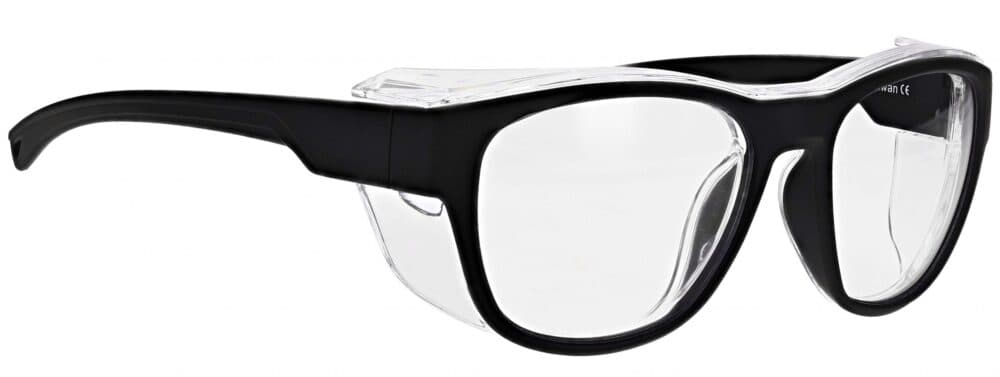
Side protection is required when there is a hazard from flying particles. Many safety frames include built-in side shields, and Z87 rated designs are tested for coverage from multiple angles.
Look for a permanent Z87 or Z87+ mark on both the frame and the lens. That mark shows the eyewear meets ANSI Z87.1, the standard OSHA recognizes for occupational eye protection.
Further Reading
Anti-Reflective: Is It Really Necessary?
What AR coating actually does, when it makes a difference, and how it changes the way you see at work, on the road, and at home.
Fogging on Glasses: What It Is, Why It Happens, and What Can Help Prevent It
How fogging forms on lenses, why common anti-fog tips fall short, and practical habits that help keep your vision clear at work and in cold weather.
Why UV Protection Still Matters on Cloudy Days
UV light reaches your eyes even when the sky is overcast. Learn how UVA and UVB differ, why cloudy days are misleading, and how to protect your vision every day.
Protecting Your Benefits: A Clear Guide to HSA, FSA, LPFSA, and HRA
HSA, FSA, LPFSA, and HRA explained in plain terms: who owns each account, what it covers, and how to use your benefits for vision care and workplace safety.
Get Prescription Safety Eyewear
Walk into the San Diego showroom to try frames on with a licensed optician, or set up an on-site program for your team.