Lens Education
Fogging on Glasses: What It Is, Why It Happens, and What Can Help Prevent It
Introduction
Fogging on glasses is an annoying occurrence. Living in the modern world, you would think we should have the technology to completely prevent it. While that feeling exists for many similar annoyances, understanding how fogging happens can help answer the lingering question of why your glasses fog up.
This article explains how fogging forms and takes a more scientific approach to practical solutions rather than only coating recommendations.
After reading this article, you'll understand what fogging is, how it happens on lenses, the science behind anti-fog coatings, and what to do to help prevent it in the future.
What Fogging Is Based on Research
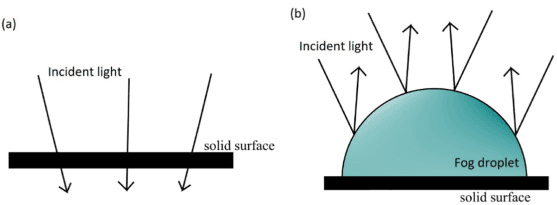
According to research from materials scientists Wahab, Razak, Teck, Azmi, Ibrahim, and Lee in the peer-reviewed article titled "Fundamentals of Antifogging Strategies, Coating Techniques and Properties of Inorganic Materials," published in the Journal of Materials Research and Technology in 2023, fogging happens when water vapor turns into tiny droplets on a lens that is colder than the surrounding air. These droplets scatter light and reduce clarity.
The researchers explain that fogging appears when three conditions interact:
- Lens temperature falls below the dew point: The lens becomes cool enough that moisture in the air begins to condense on its surface.
- The surrounding air holds enough humidity to condense: Moist air supplies the water vapor that forms droplets.
- Airflow around the lens is limited: Still air allows moisture to accumulate on the lens instead of dispersing.
When these conditions combine, they create a supersaturated environment that leads to droplet formation and visual obstruction.
The article also emphasizes that fogging is strongly influenced by the surface chemistry of the lens. Water behaves differently depending on how the lens surface is structured. Some surfaces encourage water to spread into a thin clear film. Others push water into droplets that move away.
What Fogging Is in Plain Terms
Fogging is condensation. Moisture in the air turns into tiny droplets on the lens, and those droplets scatter light. That's what creates the cloudy or blurry look.
When it happens
It shows up during cold-to-warm transitions, when warm breath rises toward the lenses, or when humidity builds up around the eyes.
Why it forms
The lens becomes a cooler surface than the air around it. When moist air hits that cooler surface, the moisture sticks and forms droplets.
A Simple Way to Think About It
Fogging happens when cooler lens surface + moist air + little airflow = fog. If you eliminate one of these factors, you can prevent fogging from happening.
Why Common Anti-Fog Tips Often Fall Short
Many tips focus on a quick fix rather than a long-term solution. They often address only one factor instead of the full picture. Knowing that multiple factors interact helps explain why fogging still occurs.
Anti-fog coatings work by changing the surface of the lens so light can pass through while moisture spreads into a clear film. Their effectiveness depends on several conditions. These are the main factors that cause anti-fog coatings to stop working as intended:
- Residue on the lens surface: Oil, sweat, dust, fingerprints, and other residue interfere with the coating and block its ability to spread moisture evenly.
- Natural wear over time: Coatings gradually break down through daily use. Normal wear reduces how evenly the coating performs.
- Scratches and repeated cleaning: Scratches change the surface pattern of the lens. Repeated rough cleaning slowly alters the coating and prevents it from creating a smooth hydrophilic layer.
- High humidity and sudden temperature changes: Very humid environments or quick temperature shifts bring more moisture than the coating can manage. This overwhelms the surface and creates fog droplets.
- Breathing direction and airflow: Warm breath or trapped air near the lens behaves like a sudden temperature spike. When airflow is limited or breath moves upward, the coating can't disperse the moisture fast enough.
These limitations don't mean anti-fog is useless. They show that anti-fog is only one part of the solution and works best when supported by other habits and conditions.

What Science Says About Anti-Fog Coatings
Material research identifies two main ways fogging can be prevented directly on a lens surface. Each method relies on how the surface interacts with water.
Superhydrophilic surface
A superhydrophilic surface pulls moisture across the lens and spreads it into a thin even film. This film stays clear because the water doesn't form droplets that scatter light. Most anti-fog coatings use this method because it works well in environments where humidity is steady or predictable. It also helps during temperature changes by reducing the number of separate droplets that can form. For this approach to work, the surface must stay smooth and clean so the water can spread evenly across the entire lens.
Superhydrophobic surface
A superhydrophobic surface repels moisture with such strong force that droplets can't settle or cling. The droplets form beads that roll to the edges of the lens and stay out of the main viewing area. This approach is effective in situations where water exposure is heavier or more sudden. It's less common for prescription lenses because the required surface texture can interfere with optical clarity if not engineered precisely. For it to work well, the lens must stay free from residue that would disrupt the smooth movement of droplets.
These two surface behaviors form the foundation of modern anti-fog technologies. Both rely on a clean, undamaged lens surface to perform correctly. Dirt, oil, scratches, or worn coatings interfere with the surface chemistry and reduce the effectiveness of either method.
Why Fogging Increases During Cold Weather and Temperature Changes
Cold weather amplifies all fogging conditions at once. Lens surfaces are cooler outdoors, and indoor heating creates warm air that holds more moisture, producing condensation when it hits a cold surface. Masks, scarves, and additional clothing layers increase the amount of warm humid air near the face.
Using the earlier formula, cooler lens surface + moist air + little airflow = fog explains why fogging becomes more common in winter.

Practical Solutions
Practical solutions work alongside anti-fog coatings. Adjusting airflow, improving fit, keeping lenses clean, and managing temperature changes all support the coating and reduce the conditions that create fog. When these habits are combined with a good coating, lenses stay clearer throughout the day.
Gear and Equipment Choices
Frames with better airflow fog less. When glasses sit very close to the face, warm humid air gets trapped and condenses on the lens. Frames with small ventilation gaps or a shape that moves air naturally let that moisture escape before it settles.
Superhydrophilic anti-fog coatings help because they spread moisture into a thin clear film instead of droplets. When airflow from the frame and the superhydrophilic surface work together, lenses stay clearer through temperature shifts and breathing events.
Other gear affects airflow too. Hard hats, face shields, respiratory protection, and earmuffs can push warm air upward or block airflow near the temples. Gear that doesn't trap air around the upper frame lowers fogging.
Fit and Breath Direction
Fit matters. Masks, gaiters, and scarves can push warm breath upward. Adjusting them so exhaled air moves downward reduces humidity near the lenses.
Nose pads help guide airflow. Raising or lowering them slightly opens space for moisture to move out instead of staying sealed against the skin. An optician can set them for you, and eyeglass adjustments in San Diego are free at our Miramar showroom.
Maintenance and Lens Hygiene
Superhydrophilic coatings work best on clean, residue-free lenses. Oils disrupt how the coating spreads moisture.
Microfiber cloths help keep the lens surface clean and free from residue. They're a gentle material that helps lower the chance of creating small scratches. Those scratches change how moisture behaves on the lens and can make fogging develop faster. Using a microfiber cloth helps preserve the smooth surface the coating needs to work properly.
Simple Behavior Adjustments
Temperature swings create fast condensation, so keeping glasses in a warmer spot before a shift helps avoid cold-to-warm shock. For example, storing them in a locker or jacket pocket instead of a cold car keeps the lens temperature closer to your work environment.
Slowing down temperature changes helps prevent sudden fogging. Moving from outdoors into a warm room, opening an oven, or putting on glasses right after a hot shower all create the same rapid shift that makes moisture collect on the lens. A simple way to reduce this is to put your glasses on in a less humid room so the lenses meet drier air first. Giving them a brief moment to adjust before entering a warm or humid space keeps the surface clearer.
What to Watch Out For
Some quick fixes can seem helpful but create new problems. These points highlight what to avoid when trying to reduce fogging:
- Dish soap or shaving cream can create a short hydrophilic layer, but they can also damage the lens and leave small abrasions that lead to more fog over time.
- Any method that risks scratching the lens will make fogging worse, since scratches change how moisture spreads.
- Alcohol and hand sanitizer can strip coatings such as anti-fog and anti-reflective, which increases fogging.
- Using a t-shirt, paper towel, or tissue instead of a microfiber cloth seems convenient but can leave tiny scratches that cause more frequent fogging.

Final Takeaway
Fogging happens when the lens surface is cooler than the environment, combined with moisture in the air and little airflow. Understanding this concept helps explain why anti-fog coatings sometimes fail and why fogging happens in the first place.
Keeping your lenses in good condition, choosing a frame that fits well and allows airflow, and making sure your gear provides protection while enabling airflow can all help reduce fogging.
While fogging is an annoyance, it can also be a safety hazard. When winter arrives, remember why fogging happens and take steps to reduce it. Understanding protects you and protects your vision.
References
Wahab, I. F., Razak, B. A., Teck, S. W., Azmi, T. T., Ibrahim, M. Z., and Lee, J. W. (2023). Fundamentals of Antifogging Strategies, Coating Techniques and Properties of Inorganic Materials. Journal of Materials Research and Technology.
Further Reading
Anti-Reflective: Is It Really Necessary?
What AR coating actually does, when it makes a difference, and how it changes the way you see at work, on the road, and at home.
What Exactly Are Safety Glasses? Understanding Z87, ANSI & OSHA Standards
What Z87 and ANSI Z87.1 mean, how OSHA enforces eye protection, when Z87+ is required, and how safety eyewear requirements vary by industry.
Why UV Protection Still Matters on Cloudy Days
UV light reaches your eyes even when the sky is overcast. Learn how UVA and UVB differ, why cloudy days are misleading, and how to protect your vision every day.
Get Prescription Safety Eyewear
Walk into the San Diego showroom to try frames on with a licensed optician, or set up an on-site program for your team.