Lens Education
Anti-Reflective: Is It Really Necessary?
Anti-Reflective Coating: Useful Upgrade or Unnecessary Add-On?
Harsh light and reflection are part of daily life: computer screens, overhead LEDs, headlights, and even sunlight bouncing off glass. Many people notice the strain but wonder if a lens coating is really needed to fix it.
Is anti-reflective coating truly necessary, or just another add-on?
That's what this article looks at: what AR coating actually does, when it makes a difference, and how it changes the way you see day to day.
What Anti-Reflective Coating Actually Does
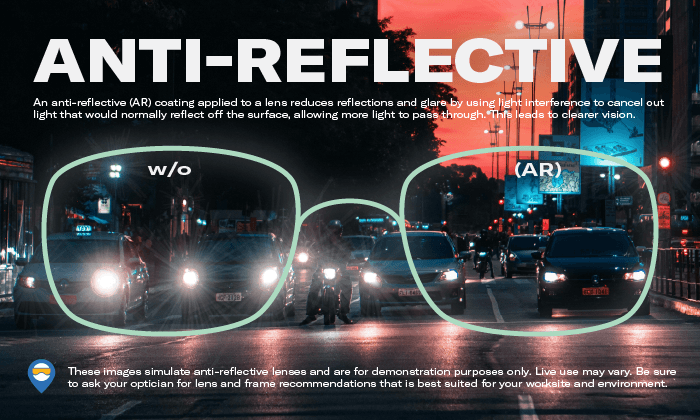
Anti-reflective coating, often called AR, is a thin layer that helps control glare on a pair of glasses. Most people have seen glare before without realizing it. It's a sharp flash that you catch on your lenses as you walk by a bright window, or light from car headlights that feels extremely bright at night. What's going on is you're seeing light bounce off the lens surface instead of passing through, and it becomes extremely distracting when bright light hits your lenses from every angle.
The coating's purpose is simple: it changes how that light behaves. Instead of bouncing straight back, more of it passes through the lens where it's useful. That small adjustment reduces the faint halos and reflections that build up over time and makes vision feel more stable. The coating doesn't show when you look at the lens. It's completely clear. But you usually notice the difference after wearing it for a few days. Your eyes feel less strained, and focusing takes less effort in bright light.
Different lenses use slightly different types of coatings. Most clear prescription lenses have it on both sides, while some sunglasses only have it on the inside surface. That's done to keep light from reflecting in from behind you. The overall idea stays the same: reduce stray light and help your eyes see without interference.
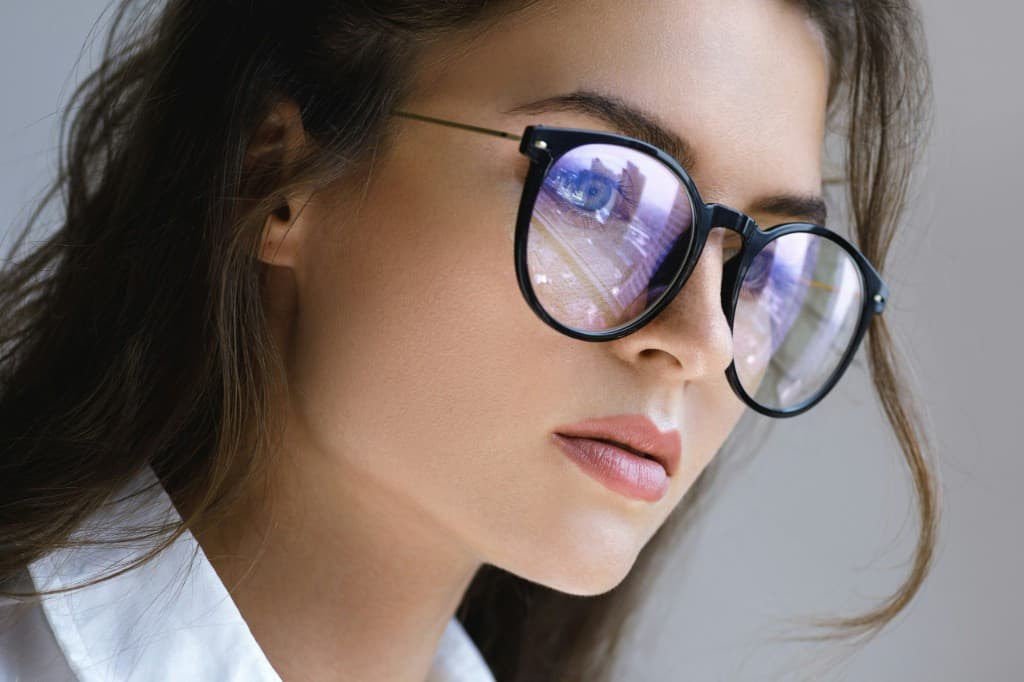
The coating doesn't affect your prescription or the power of your lenses. If you tip your glasses at certain angles, you might notice a faint green or purple tint. That's completely normal and part of how the coating interacts with certain colors of light.
After you've worn AR lenses for a while, switching back to regular ones can feel strange. The extra glare that never used to bother you suddenly stands out, especially when driving at night or working under strong light.
How AR Helps at a Glance
- Less glare: Headlights, screens, and overhead lights can bounce right off your lenses. AR coating cuts that shine so your view stays clean and calm.
- Sharper vision: When more light reaches your eyes, details stand out. Words on a screen look clearer, and colors look truer to life.
- More comfort: With less glare and strain, you're not squinting or rubbing your eyes as much. It helps through long shifts, late drives, or endless screen time.
It's easy to overlook AR coating because it's invisible, and that's what makes it powerful. It doesn't call attention to itself; you just see more clearly, feel less strain, and move through the day without the glare that used to get in the way.
Why AR Matters for Your Vision
Your eyes work best when light is even and predictable. When reflections scatter across your lenses, that balance disappears. Contrast drops, and your visual system strains to adjust. The effects often show up as:
- Tired or tight eyes
- Headaches or blur after long hours
- Trouble focusing on fine detail or reading small text
- Difficulty seeing clearly while driving at night or in dim light
Anti-reflective coatings directly address this problem. They cut reflections from headlights, streetlights, and oncoming traffic, one of the biggest causes of nighttime glare. By allowing more light to pass through the lens, AR coating sharpens contrast so you can see road markings, signs, and movement with greater accuracy.
The same principle applies indoors. Under harsh LEDs or mixed lighting, AR lenses help your eyes process visual information more efficiently. Colors look true, edges stay defined, and your overall focus feels steadier.
Paired with an accurate prescription, AR lenses help your eyes operate at their natural comfort level: clear, relaxed, and confident whether you're at work, at home, or driving after dark.
A Deeper Look at AR in Everyday Life
At Work or in the Classroom
Whether you're at work or in the classroom, you probably don't realize how much your eyes are working throughout a normal day. Between computer screens, bright overhead lights, and glare from reflective desks or lab surfaces, your eyes are constantly at work. That constant effort builds into steady strain, especially if you're reading fine print, checking measurements, or staring at data for hours.
Anti-reflective lenses help by cutting down the scattered light that causes that extra effort. In a shop or lab, that means fewer distractions from overhead fixtures or glare bouncing off equipment. In the classroom or office, it means less squinting at screens and smoother focus through the day. It's the same idea behind good safety gear. Clear vision reduces mistakes and helps you stay focused on the work, not the glare.
Driving and Commuting
Night driving can be scary and difficult when everyone's headlights seem extra bright and those LED beams never really dim. Every headlight, taillight, or streetlight throws scattered light that bounces off your lenses. Those reflections create the "halo" effect that can blur what you're trying to see. Your eyes work overtime to separate useful light from reflected glare, and that can slow your reaction time, which is dangerous while driving.
Anti-reflective coatings help by letting more usable light pass straight through the lens instead of bouncing around. Road lines, signs, and dashboard displays stay clearer, and your eyes stay relaxed instead of constantly refocusing. For people who drive in the early morning, at night, or over long distances, AR lenses can mean steadier vision and fewer moments of strain, the kind that can turn small glare into a safety risk.
Indoor and Home Settings
Indoor lighting can be just as hard on your eyes as driving at night. Bright kitchen LEDs, mirrors, and glass tables reflect light in every direction and can hit your eyes from any angle. It isn't noticeable immediately, but that constant change in brightness is what makes your eyes work harder to stay focused.
Anti-reflective lenses really help settle that glare down for you. They take the sharp edge off bright lights and all those reflections from different surfaces and screens. With anti-reflective coatings, you don't have to keep refocusing, and whether you're cooking in the kitchen, reading at home, or relaxing while watching television, your vision stays steady and your eyes feel at ease.
Outdoor Activities
During outdoor activities, sunlight reflections on the water, car windows, or dark surfaces appear everywhere. Polarized lenses are very effective at reducing that glare, but anti-reflective coatings can also help take that edge off.
The coating helps keep light from bouncing off your glasses, so you don't have to fight bright daylight. Outdoor strolls, cruising around, or working outside, anti-reflective coatings can help with the small differences that prevent your eyes from straining.

The Science Behind the Coating
Anti-reflective coatings work through a process called light interference. It's the same effect you sometimes see on soap bubbles or a thin film of oil, that slight color shift that happens when light waves overlap. In AR coatings, several microscopic layers are added to the lens, each one designed to cancel out a specific part of reflected light. The result is that nearly all visible light passes through to your eyes instead of bouncing back.
Modern Layering
Today's AR coatings use multiple layers that each serve a purpose:
- Hardcoat layer: Adds a protective base that helps prevent small scratches and wear.
- Hydrophobic layer: Keeps water from clinging to the surface, so droplets roll right off.
- Oleophobic layer: Resists fingerprints and smudges from skin oils.
- Anti-static layer: Helps reduce dust buildup, keeping lenses clear longer.
Types of Anti-Reflective Coatings
Standard AR
The most common option, and often the most underrated. It handles the basics extremely well, cutting glare from headlights, screens, and overhead lights. Standard AR keeps your lenses clear and your eyes more relaxed, which makes it a solid choice for almost anyone, whether you're working, studying, or driving at night.
Premium AR
This version takes everything a step further. In addition to glare control, premium coatings use stronger hydrophobic and oleophobic layers, the same ones that make water bead up and fingerprints wipe away easily. The lens stays cleaner longer and resists fine scratches better than standard coatings. It's ideal for people who wear their glasses all day or move through different environments where light, heat, and humidity change often.
Digital or Blue-Light AR
This one is built for heavy screen time. It includes all the benefits of glare control but adds extra filtering for high-energy blue light.
Blue-light AR isn't the same as a blue-light filter. That's where people often get confused.
A traditional blue-light filter changes the lens tint to block more short-wavelength light, while a blue-light AR coating uses interference layers to reflect some of that light away without changing lens color. You get protection from digital glare and strain while keeping lenses clear and natural-looking.
A Few Technical Details
Good coatings cover both the front and back of the lens. That prevents light from sneaking in from behind and reflecting into your vision. AR can also work alongside other lens technologies like blue-light filters or UV protection without affecting tint or Transitions features.
Overall, the goal is simple: a lens that stays clear, resists wear, and keeps your eyes comfortable in every kind of light.
Caring for AR-Coated Lenses
Anti-reflective lenses give you a sharper view, but they need a little care to stay that way. The coating is durable but not indestructible, so how you clean them matters.
Daily Cleaning Tips
- With lens cleaner: Spray a small amount on both sides of the lens, then wipe gently with a clean microfiber cloth. It clears fingerprints and smudges without streaks.
- Without cleaner: Rinse your glasses under lukewarm water first (not hot). Add a drop of mild, lotion-free soap with no alcohol or fragrance, rub gently with your fingertips, rinse again, and dry with a soft microfiber cloth.
When you're not wearing your glasses, store them in a case. It protects the coating from scratches, dust, and the occasional drop. Be careful not to leave your lenses in a hot car, as extreme levels of heat can remove the anti-reflective coating. If a lens is already scratched through the coating, it needs replacing, and we can cut new lenses for a frame you already own.
What to Avoid
- Don't wipe lenses while dry or use your shirt or paper towels.
- Avoid products that contain alcohol, ammonia, or bleach.
- Keep them away from heat. Dashboards and heater vents can damage the coating.
- If you use a spray, apply it to the cloth instead of the lens surface.
Fog and Moisture
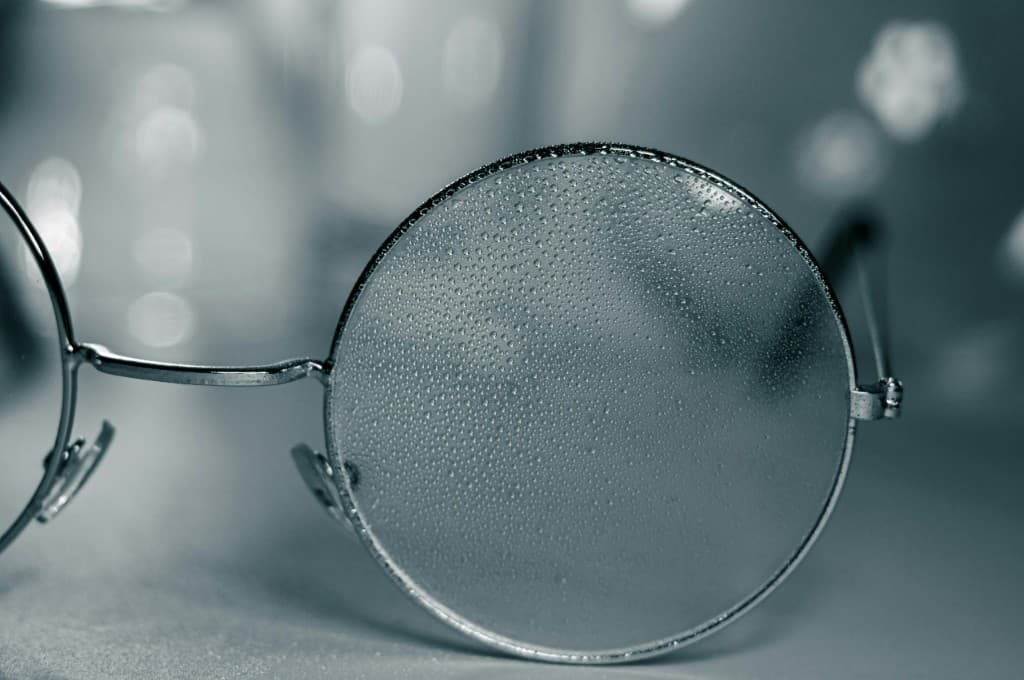
If your lenses fog up from temperature changes or mask use, choose anti-fog wipes labeled safe for AR coatings. Regular ones can slowly break down the surface layers.
Scratches
Tiny scuffs might polish out with a lens cloth, but deep marks usually mean replacement. Once the coating wears through, clarity can't fully recover.

Common Misconceptions (and the Facts)
“AR is just for looks.”
Not true. The coating's main job is functional. It doesn't just make lenses look better. It cuts glare, sharpens vision, and eases eye strain in bright or mixed lighting. The fact that your lenses look clearer to others is just a nice bonus.
“AR lenses scratch easier.”
Older versions did, but modern AR coatings are bonded to a hardened base layer. That layer actually improves durability and helps protect against small scratches from everyday use.
“The coating will peel off.”
High-quality AR coating doesn't peel. It's fused at the molecular level, not painted or sprayed on. Peeling usually happens only when lenses are exposed to harsh cleaners, high heat, or poor-quality manufacturing.
“AR and polarized lenses do the same thing.”
They solve different problems. Polarized lenses block glare coming off surfaces like water, glass, or roads. AR lenses stop light from bouncing off the front and back of your glasses. You can even have both on the same pair for all-around clarity.
“Blue-light protection replaces AR.”
They work together but serve different purposes. Blue-light filters manage digital eye strain by targeting certain light wavelengths. AR coatings handle reflections and improve contrast. Most people benefit from having both.
“You don't need AR if you already have Transitions.”
Transitions lenses react to light changes, but that treatment doesn't stop reflections. Adding AR coating keeps your view sharp whether your lenses are clear or darkened.

The Everyday Difference
People usually notice the difference when they compare lenses with AR to lenses without it. The view feels clearer, like a faint haze is gone. After a few days, you stop thinking about it. Things just look the way they should.
- Small text and fine details stand out more, even under harsh light.
- Overhead lights lose that sharp glare that makes you squint.
- Your lenses stop reflecting white spots back at you or others.
- Driving at night feels calmer, especially with oncoming headlights.
- By the end of the day, you don't feel as much eye fatigue.
It's not a big change all at once, but the difference builds over time. You notice your eyes can stay focused longer and feel more comfortable through the day.
Final Takeaway
Anti-reflective coating can seem like an unnecessary add-on to people who've never worn it, but its subtlety can be deceiving. People assume it doesn't make much of a difference, but once you wear it, you'll notice a clear improvement in lens clarity.
Whether you're indoors or outdoors, in the classroom or at work, driving during the day or at night, anti-reflective coatings can make a meaningful difference in your visual clarity. So next time you buy a pair of glasses, ask what anti-reflective options are available.
Frequently Asked Questions
For most people who wear glasses every day, yes. It cuts glare from headlights, screens, and overhead lights, so you see sharper detail with less eye strain. You'll notice it most when driving at night, working under bright lights, or spending long hours on a screen.
It uses light interference. Several microscopic layers on the lens each cancel out part of the reflected light, so nearly all visible light passes through the lens to your eyes.
It helps most if you drive at night, work under bright or mixed lighting, or spend long hours at a screen. Those are the settings where reflections off your lenses cause glare, halos around lights, and tired eyes.
No. The coating is clear and doesn't affect your prescription or the power of your lenses. At some angles you may see a faint green or purple tint on the lens surface, which is normal.
Yes. Standard and premium anti-reflective coatings both go on prescription safety lenses. Premium adds water, oil, and dust repellent layers, so the lenses stay cleaner and wipe down more easily.
Spray lens cleaner on both sides and wipe with a clean microfiber cloth. Without cleaner, rinse under lukewarm water, rub gently with a drop of mild, lotion-free soap, rinse again, and dry with microfiber. Keep paper towels, shirts, and cleaners with alcohol, ammonia, or bleach off the lenses, and keep the glasses away from heat.
Further Reading
Fogging on Glasses: What It Is, Why It Happens, and What Can Help Prevent It
How fogging forms on lenses, why common anti-fog tips fall short, and practical habits that help keep your vision clear at work and in cold weather.
Why UV Protection Still Matters on Cloudy Days
UV light reaches your eyes even when the sky is overcast. Learn how UVA and UVB differ, why cloudy days are misleading, and how to protect your vision every day.
What Exactly Are Safety Glasses? Understanding Z87, ANSI & OSHA Standards
What Z87 and ANSI Z87.1 mean, how OSHA enforces eye protection, when Z87+ is required, and how safety eyewear requirements vary by industry.
Get Prescription Safety Eyewear
Walk into the San Diego showroom to try frames on with a licensed optician, or set up an on-site program for your team.